
Cold Performance Rounded LongLife Floor Marking Symbols
(4)Why Standard Floor Markings Fail in Cold Storage
Standard floor markings rely on pressure-sensitive adhesives engineered for ambient-temperature application. The adhesive needs warmth to flow into the surface texture and form a reliable bond. In freezers and chilled stores, the adhesive loses tack as temperature drops; the bond fails to form during application, and the marking lifts under forklift traffic and pallet movement once in service.
Cold storage floor markings use a low-temperature adhesive formulation that bonds reliably at temperatures as low as -20°C and remains effective across the cold storage operating range. The marking installs at the cold storage operating temperature and stays in service through forklift traffic, pallet handling and routine cleaning cycles without lifting or fading.
The Orgatex UK Cold Storage Floor Marking Symbols Range
The Cold Performance Rounded LongLife range covers four shapes, each used for a specific position in a cold storage 5S layout. The straight (longitudinal) shape marks bay boundaries, aisle edges and continuous lines along racking or storage zones. The L-shape marks pallet corners - four L-shapes mark a full four-corner pallet bay, two L-shapes mark a half bay.
The T-shape marks intersections where one aisle meets another or where bays line up along a row of racking. The point marks forklift target points, drop targets, specific positions and pickup zones. All four shapes share the same low-temperature adhesive, the same forklift-resistant LongLife construction and the same 90mm width as the standard range. A cold storage 5S layout uses the same visual language as the rest of the site.
Where Cold Storage Floor Markings Are Used
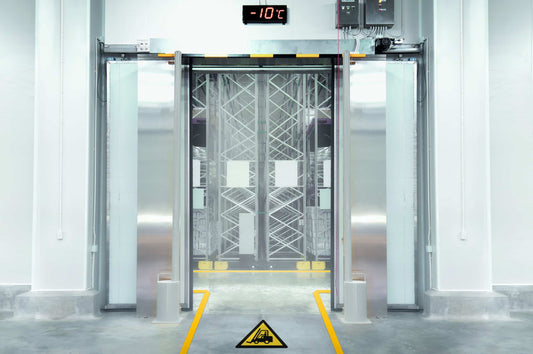
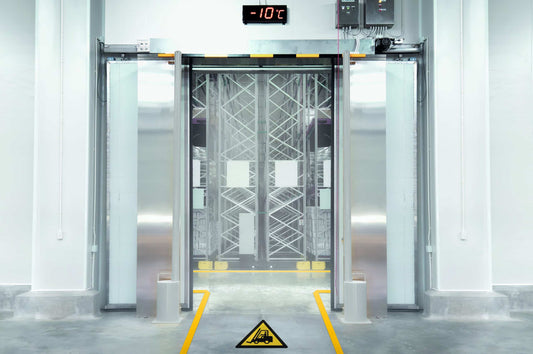
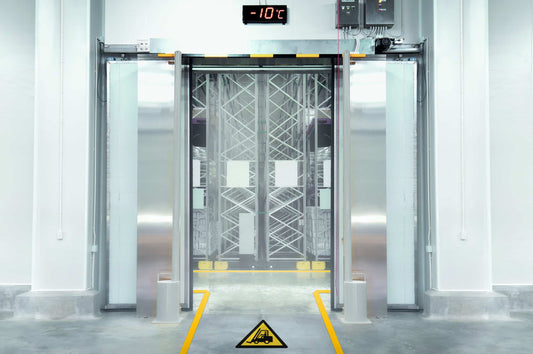
Cold storage floor markings serve four core environments. Frozen food warehouses operate between -18°C and -25°C and require floor markings that bond and survive at these temperatures, with pallet positions, picking aisles and dispatch zones all needing defined marking for safe forklift operation. Chilled distribution centres operate between 0°C and +8°C - less extreme than deep freeze but still below the threshold where standard adhesives bond reliably.
Pharmaceutical cold chain operations use cold storage floor markings to support 5S, GMP audit and cold chain compliance in temperature-controlled storage for medicines and vaccines. Refrigerated production areas - meat, dairy, fresh produce and pharmaceutical filling - use the markings to define zones, traffic routes and storage positions in continuous cold operating environments.
Cold Performance vs Standard Floor Marking Symbols
Orgatex UK offers floor marking symbols in two adhesive specifications. The standard rounded floor marking symbols are the right specification for warehouses, manufacturing and distribution operations at ambient temperature. The standard LongLife adhesive bonds reliably above freezing and delivers full forklift resistance across years of service.
Cold storage floor markings are the right specification for environments where the application surface or operating temperature is at or below freezing. The low-temperature adhesive bonds at temperatures down to -20°C and remains effective across the cold storage operating range. The two ranges share the same shape language - straight, L-shape, T-shape, point - so a site running 5S across both ambient and cold areas applies a consistent visual standard. Only the adhesive specification changes.
Building a Complete Cold Storage 5S Layout
A full cold storage 5S layout combines symbols and tape. The Cold Performance Rounded LongLife symbols mark pallet corners, intersections, target points and bay starts. The cold performance floor marking tape creates continuous aisle markings and zone boundaries that run between the symbols.
The combined system delivers the full visual infrastructure for a cold storage operation: aisle edges defined by tape, bay corners marked by L-shapes, intersections marked by T-pieces, drop targets marked by points, and bay starts marked by longitudinal symbols. All elements are rated for low-temperature application and continuous service. For a typical 5S rollout, plan the layout on a CAD drawing first, then apply symbols and tape in sequence against the planned layout.
Applying Cold Storage Floor Markings
Surface preparation is critical for cold-temperature application. The floor surface should be clean, dry and free of frost, ice, water, grease and contamination before application. Allow newly cleaned floors to dry fully. Frost or moisture under the marking will compromise the bond and lead to early lifting.
Position each symbol against a chalk line or pre-marked layout to keep the bay square. Press down firmly across the full footprint of the symbol, paying particular attention to corners and edges where lifting tends to start. For larger installations, an industrial pressure roller applied across the full surface of each marking significantly extends adhesion life. Once cured at the cold storage operating temperature, the markings deliver the same forklift resistance and scratch-proof service life as the standard ambient-temperature range.
Cold Storage Floor Markings in 5S and Audit Compliance
A consistent floor marker system is what makes the 'set in order' step of a 5S programme audit-proof. In cold storage, this means using floor markings rated for the operating environment rather than allowing the standard to drift below freezing. Floor markings rated for cold environments support cold chain audit frameworks, pharmaceutical GMP audits, and food safety compliance by providing documented visual standards across cold storage areas.
Why Standard Floor Markings Fail in Cold Storage
Standard floor markings rely on pressure-sensitive adhesives engineered for ambient-temperature application. The adhesive needs warmth to flow into the surface texture and form a reliable bond. In freezers and chilled stores, the adhesive loses tack as temperature drops; the bond fails to form during application, and the marking lifts under forklift traffic and pallet movement once in service.
Cold storage floor markings use a low-temperature adhesive formulation that bonds reliably at temperatures as low as -20°C and remains effective across the cold storage operating range. The marking installs at the cold storage operating temperature and stays in service through forklift traffic, pallet handling and routine cleaning cycles without lifting or fading.
The Orgatex UK Cold Storage Floor Marking Symbols Range
The Cold Performance Rounded LongLife range covers four shapes, each used for a specific position in a cold storage 5S layout. The straight (longitudinal) shape marks bay boundaries, aisle edges and continuous lines along racking or storage zones. The L-shape marks pallet corners - four L-shapes mark a full four-corner pallet bay, two L-shapes mark a half bay.
The T-shape marks intersections where one aisle meets another or where bays line up along a row of racking. The point marks forklift target points, drop targets, specific positions and pickup zones. All four shapes share the same low-temperature adhesive, the same forklift-resistant LongLife construction and the same 90mm width as the standard range. A cold storage 5S layout uses the same visual language as the rest of the site.
Where Cold Storage Floor Markings Are Used
Cold storage floor markings serve four core environments. Frozen food warehouses operate between -18°C and -25°C and require floor markings that bond and survive at these temperatures, with pallet positions, picking aisles and dispatch zones all needing defined marking for safe forklift operation. Chilled distribution centres operate between 0°C and +8°C - less extreme than deep freeze but still below the threshold where standard adhesives bond reliably.
Pharmaceutical cold chain operations use cold storage floor markings to support 5S, GMP audit and cold chain compliance in temperature-controlled storage for medicines and vaccines. Refrigerated production areas - meat, dairy, fresh produce and pharmaceutical filling - use the markings to define zones, traffic routes and storage positions in continuous cold operating environments.
Cold Performance vs Standard Floor Marking Symbols
Orgatex UK offers floor marking symbols in two adhesive specifications. The standard rounded floor marking symbols are the right specification for warehouses, manufacturing and distribution operations at ambient temperature. The standard LongLife adhesive bonds reliably above freezing and delivers full forklift resistance across years of service.
Cold storage floor markings are the right specification for environments where the application surface or operating temperature is at or below freezing. The low-temperature adhesive bonds at temperatures down to -20°C and remains effective across the cold storage operating range. The two ranges share the same shape language - straight, L-shape, T-shape, point - so a site running 5S across both ambient and cold areas applies a consistent visual standard. Only the adhesive specification changes.
Building a Complete Cold Storage 5S Layout
A full cold storage 5S layout combines symbols and tape. The Cold Performance Rounded LongLife symbols mark pallet corners, intersections, target points and bay starts. The cold performance floor marking tape creates continuous aisle markings and zone boundaries that run between the symbols.
The combined system delivers the full visual infrastructure for a cold storage operation: aisle edges defined by tape, bay corners marked by L-shapes, intersections marked by T-pieces, drop targets marked by points, and bay starts marked by longitudinal symbols. All elements are rated for low-temperature application and continuous service. For a typical 5S rollout, plan the layout on a CAD drawing first, then apply symbols and tape in sequence against the planned layout.
Applying Cold Storage Floor Markings
Surface preparation is critical for cold-temperature application. The floor surface should be clean, dry and free of frost, ice, water, grease and contamination before application. Allow newly cleaned floors to dry fully. Frost or moisture under the marking will compromise the bond and lead to early lifting.
Position each symbol against a chalk line or pre-marked layout to keep the bay square. Press down firmly across the full footprint of the symbol, paying particular attention to corners and edges where lifting tends to start. For larger installations, an industrial pressure roller applied across the full surface of each marking significantly extends adhesion life. Once cured at the cold storage operating temperature, the markings deliver the same forklift resistance and scratch-proof service life as the standard ambient-temperature range.
Cold Storage Floor Markings in 5S and Audit Compliance
A consistent floor marker system is what makes the 'set in order' step of a 5S programme audit-proof. In cold storage, this means using floor markings rated for the operating environment rather than allowing the standard to drift below freezing. Floor markings rated for cold environments support cold chain audit frameworks, pharmaceutical GMP audits, and food safety compliance by providing documented visual standards across cold storage areas.
-


Cold Performance LongLife Rounded Floor Symbol - Straight
5S Projects in deep freeze area with bonding temperature down to -20°.
-

Cold Performance LongLife Rounded Floor Symbol - L Shape
5S Projects in deep freeze area with bonding temperature down to -20°.
-

Cold Performance LongLife Rounded Floor Symbol - Point
5S Projects in deep freeze area with bonding temperature down to -20°.
-

Cold Performance LongLife Rounded Floor Symbol - T Shape
5S Projects in deep freeze area with bonding temperature down to -20°.


Frequently Asked Questions
What are cold storage floor markings? +
Cold storage floor markings are floor demarcation symbols engineered for application and continuous service at low temperatures. The Orgatex UK Cold Performance range bonds at temperatures down to -20°C and is used to mark pallet positions, aisles and zones in deep freeze warehouses, chilled distribution centres and refrigerated production environments.
What temperature can cold storage floor markings be applied at? +
Orgatex UK Cold Performance floor markings can be applied at temperatures down to -20°C. The low-temperature adhesive bonds reliably at the cold storage operating temperature and remains effective across the typical cold storage range, from chilled (+8°C) through to deep freeze (-25°C).
How do cold storage floor markings differ from standard floor markings? +
Cold storage floor markings use a low-temperature adhesive formulation rated for application down to -20°C. Standard floor markings use a pressure-sensitive adhesive that requires above-freezing temperatures to bond reliably. Both ranges share the same forklift-resistant LongLife construction and the same shape language - only the adhesive specification changes.
Which environments are cold storage floor markings used in? +
Cold storage floor markings are used in frozen food warehouses (-18°C to -25°C), chilled distribution centres (0°C to +8°C), pharmaceutical cold chain storage and refrigerated production areas. They support 5S, audit compliance and visual management in any environment where standard floor markings would fail.
What shapes of cold storage floor marking are available? +
The Orgatex UK Cold Performance Rounded LongLife range covers four shapes: straight (longitudinal) for bay boundaries and continuous lines, L-shape for pallet corners, T-shape for aisle intersections, and point for forklift target positions. All four shapes are 90mm wide and forklift-resistant.
How do cold storage floor markings support 5S and cold chain audit compliance? +
Cold storage floor markings make the 'set in order' layer of 5S audit-proof in cold environments by maintaining consistent visual demarcation that does not depend on warmth to remain in place. The markings support cold chain audit frameworks, pharmaceutical GMP requirements and food safety compliance by providing documented visual standards across cold storage areas.
